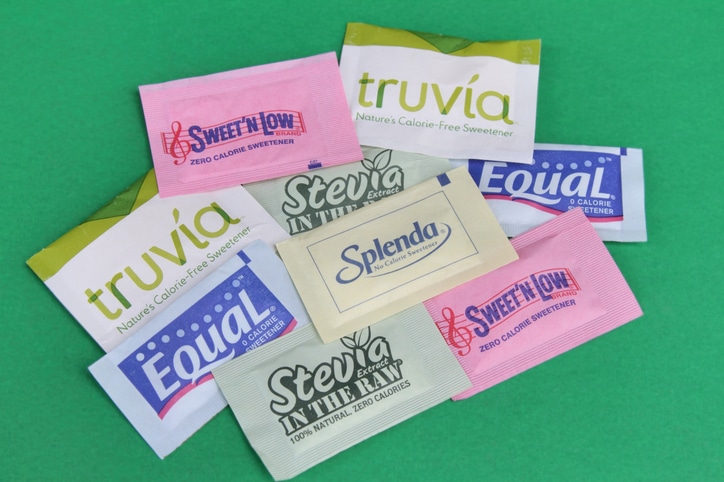
Sugar substitutes are everywhere. From diet sodas to protein bars to “no added sugar” desserts. As a dietitian, I often get asked: Are these actually healthier than sugar? The answer isn’t one-size-fits-all.
Sugar substitutes, also referred to as artificial sweeteners, non-nutritive sweeteners, or low-calorie sweeteners, are used to provide sweetness with fewer, or no, calories than regular sugar. They fall into a few broad categories:
- Artificial sweeteners (e.g., aspartame, sucralose)
- Sugar alcohols (e.g., erythritol, xylitol)
- Natural sweeteners (e.g., stevia, monk fruit)
- Modified sugars or rare sugars (e.g., allulose)
Each type behaves differently in the body, affects blood sugar differently, and comes with its own pros and cons. Understanding these differences is key to making informed choices.
Common Sugar Substitutes (Dietitian Breakdown)
1. Aspartame
- Found in: Tabletop sweeteners (Equal), diet sodas, sugar-free gum, light yogurt
- What it is: A low-calorie artificial sweetener about 200x sweeter than sugar
- Side effects: Some people report headaches or sensitivity
- Health perspective: Generally recognized as safe in moderate amounts, but not ideal for frequent, daily use if you’re sensitive
2. Sucralose
- Found in: Baked goods, protein powders, “sugar-free” snacks
- What it is: A zero-calorie artificial sweetener (commonly known as Splenda)
- Side effects: In large amounts, may alter gut bacteria
- Health perspective: Fine occasionally, but I don’t recommend relying on it heavily
3. Saccharin
- Found in: Tabletop sweeteners (Sweet ‘N Low), diet drinks
- What it is: One of the oldest artificial sweeteners
- Side effects: Bitter aftertaste; outdated cancer concerns largely debunked
- Health perspective: Safe, but less commonly used today due to taste
4. Acesulfame Potassium (Ace-K)
- Found in: Diet sodas, sugar-free desserts
- What it is: Often combined with other sweeteners for better taste
- Side effects: Limited long-term research compared to others
- Health perspective: Acceptable in small amounts, but not a top recommendation
5. Stevia
- Found in: Natural sweeteners, flavored waters, yogurt
- What it is: A plant-derived, zero-calorie sweetener
- Side effects: Can have a slightly bitter or licorice aftertaste
- Health perspective: One of the better options, especially for blood sugar control
6. Monk Fruit
- Found in: Natural sweetener blends, low-carb products
- What it is: A natural, zero-calorie sweetener from fruit extract
- Side effects: Usually well tolerated
- Health perspective: One of my top recommendations—natural and doesn’t spike blood sugar
7. Erythritol
- Found in: Keto desserts, protein bars, sugar-free baked goods
- What it is: A sugar alcohol with almost zero calories
- Side effects: Generally well tolerated, but large amounts may cause bloating and other digestive symptoms
- Health perspective: Better tolerated than other sugar alcohols; good in moderation
8. Xylitol
- Found in: Sugar-free gum, mints, oral care products
- What it is: A sugar alcohol with some calories
- Side effects: Can cause digestive upset; toxic to dogs
- Health perspective: Fine occasionally; also beneficial for dental health and cavity prevention
9. Sorbitol & Mannitol
- Found in: Sugar-free candies, syrups
- What they are: Sugar alcohols with moderate sweetness
- Side effects: Commonly cause bloating, gas, and diarrhea
- Health perspective: Limit intake—these are the most likely to cause GI distress
10. Allulose
- Found in: Low-carb snacks, syrups, baked goods
- What it is: A rare sugar with minimal calories
- Side effects: May cause mild digestive discomfort in large amounts
- Health perspective: Very promising—minimal blood sugar impact and good taste
11. Honey
- Found in: Teas, baked goods, dressings
- What it is: A natural sugar with antioxidants
- Side effects: Still raises blood sugar
- Health perspective: Slight nutritional edge over sugar, but still should be limited
12. Maple Syrup
- Found in: Breakfast foods, baking
- What it is: Natural sweetener with trace minerals
- Side effects: High in sugar
- Health perspective: A more natural option, but still sugar—use sparingly
13. Agave Nectar
- Found in: “Health” foods, beverages
- What it is: High in fructose
- Side effects: May negatively impact liver health when overconsumed
- Health perspective: Not significantly healthier than sugar despite marketing claims
Key Differences Between Sugar Substitutes
- Calories: Artificial sweeteners and some natural options are zero-calorie, while sugar alcohols and natural sugars contain some calories
- Blood sugar impact: Stevia, monk fruit, and erythritol have little to no effect; honey and maple syrup do
- Digestive tolerance: Sugar alcohols are the most likely to cause bloating or discomfort
- Processing level: Artificial sweeteners are highly processed; stevia and monk fruit are more natural
Final Dietitian Tips: How to Use Sugar Substitutes Wisely
1. Focus on reducing overall sweetness
The goal shouldn’t be to replace sugar with more sweetness. Instead, retrain your palate to need less.
2. Choose better options when possible
Best overall picks:
- Stevia
- Monk fruit
- Allulose
- Erythritol (in small amounts)
3. Limit artificial sweeteners
They’re safe, but relying on them daily may:
- Maintain sugar cravings
- Potentially impact gut health
4. Watch portion sizes
Even healthier options can cause issues in excess:
- Sugar alcohols → digestive upset
- Natural sugars → blood sugar spikes + higher calorie counts
5. Pair with balanced meals
Using sweeteners alongside:
- Protein
- Fiber
- Healthy fats
…helps stabilize blood sugar and improve satiety.
Bottom Line
Sugar substitutes can absolutely have a place in a balanced diet, but they’re not a free pass to unlimited sweetness. From a dietitian’s perspective, the best approach is to prioritize whole foods, reduce overall sugar intake, and use the right substitutes strategically.